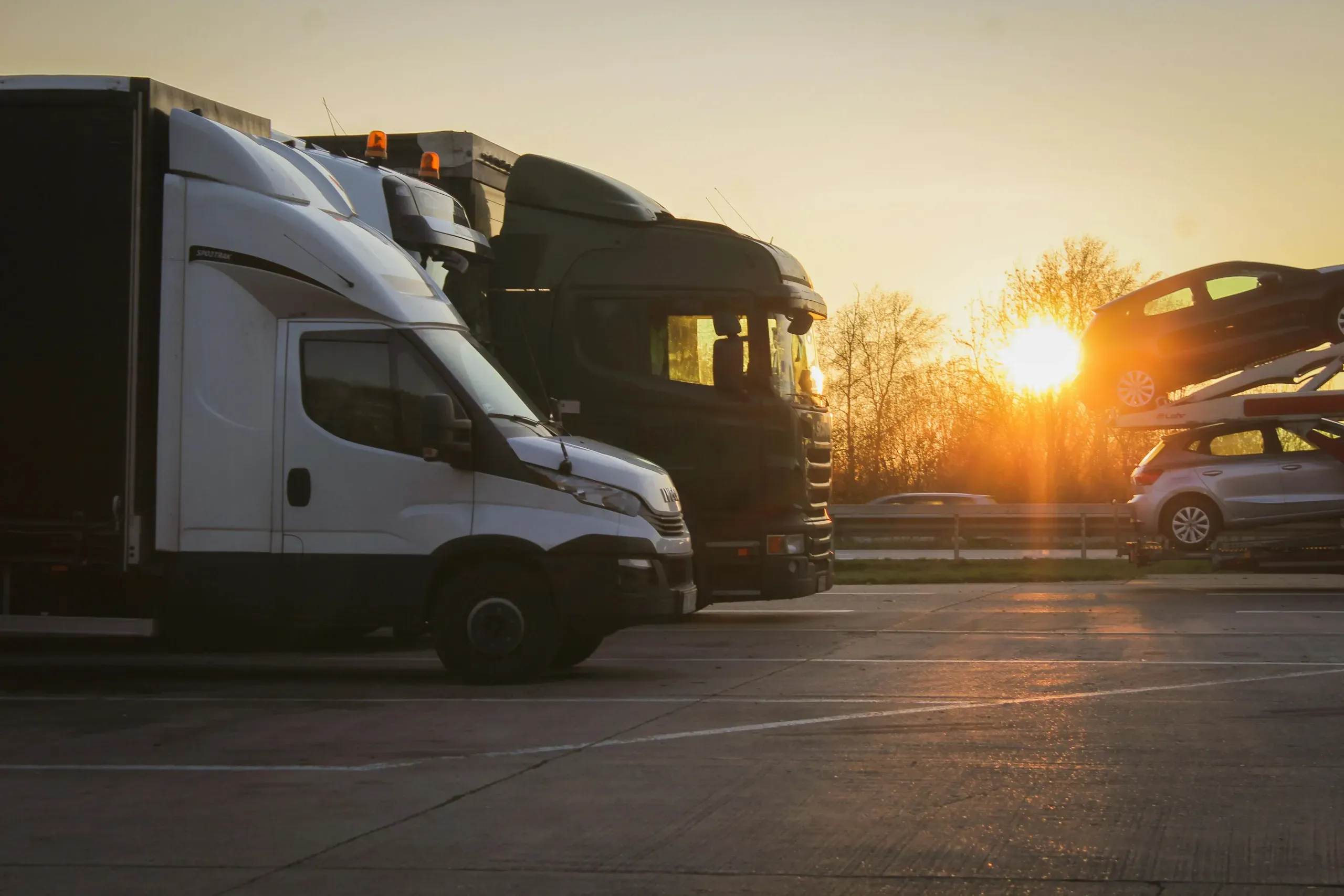
Ship Car from North Dakota to South Dakota
Shipping a vehicle from North Dakota to South Dakota covers approximately 322 miles, with a typical transit time of two to three days for most standard open-trailer shipments. Because this route relies on key corridors like US-83 S, your vehicle stays on the same truck from pickup to final delivery. This guide explains how to navigate the entire process, including expected costs and transit timelines, how we connect you with vetted independent carriers, essential vehicle preparation tips, common shipping scenarios, and answers to frequently asked questions about moving your car across state lines.
- No-obligation quote within 2 minutes
- Price all-inclusive
- No charge until driver confirmed
- Distance
- 322 mi
- Transit time
- 2–3 days
- Open carrier from
- $525
How much does it cost to ship a car from North Dakota to South Dakota?
For this 322-mile route, open transport typically ranges from $525 to $725, while enclosed shipping generally costs between $950 and $1,250, with transit times usually spanning two to three days. As a referral service, Ship Car Pros connects you with independent carriers who bid on your shipment, ensuring you receive a transparent, all-inclusive rate based on current market conditions. Six primary factors determine where your final price lands, including your vehicle's size, its operational status, your flexibility on pickup dates, and the specific zip codes for your pickup and delivery. By understanding these variables, you can better manage your budget and expectations for the journey ahead. We will break down how these individual factors impact your quote in the sections below.
What factors affect car shipping cost?
Several variables combine to determine the final cost of your transport. While the distance between North Dakota and South Dakota is fixed, these specific details allow carriers to calculate the effort required for your load:
- Vehicle dimensions and weight: Larger trucks and SUVs require more trailer space and fuel than compact sedans.
- Transport type: Choosing enclosed protection costs more than standard open-trailer service.
- Pickup and delivery flexibility: Giving us a wider window allows carriers to optimize their routes, often saving you money.
- Seasonal demand: Peak moving times and harsh winter weather can shift availability and pricing.
- Route accessibility: Delivering to remote, rural locations requires more time and fuel than frequent stops in major metro hubs.
- Vehicle operability: Non-running vehicles require specialized winching equipment to load and unload safely.
Our referral network evaluates these factors to provide you with an accurate, all-inclusive quote for your specific shipment.
Open vs. enclosed car transport: which should you choose?
Most vehicles ship using open transport. It is the industry standard-the same method used to deliver new cars to dealerships. Because your vehicle is exposed to the elements, it is the most efficient choice, with a typical rate around $595 for this route. If you are shipping a daily driver, an SUV, or a standard truck, open transport is the most practical and cost-effective option.
Enclosed transport provides a fully sealed trailer, shielding your vehicle from road debris, dust, and weather. This premium service typically costs around $1,043 for this corridor. You should choose this route if you are moving a high-value exotic, a vintage classic, or a custom build that must arrive in pristine condition. It is also the right move for vehicles with very low ground clearance that might struggle with standard loading ramps. When in doubt, open is almost always the right fit.
- Open carrier
- $525–$725
- Standard 7–10 car hauler.
- Enclosed carrier
- $950–$1,250
- Sealed trailer for high-value vehicles.
How long does it take to ship a car from North Dakota to South Dakota?
Shipping your vehicle across the 322 miles from North Dakota to South Dakota typically takes two to three days. While the distance itself is relatively short, this timeline includes the time required for a driver to navigate to your pickup address, conduct a thorough inspection, and handle the actual transport while adhering to federal safety limits on daily driving hours. Because drivers must balance their time between multiple stops, fueling, and mandatory rest periods, this window allows for a predictable and safe arrival. We will look at how specific pickup windows and seasonal weather patterns can influence these estimates in the following sections.
Which routes do carriers usually take?
For this 322-mile route, carriers typically rely on US-83 S as the primary artery connecting the two states. This corridor is well-traveled, allowing drivers to maintain a direct path while avoiding the more complex mountain passes found further west. You will find higher pickup and drop-off density in major hubs like Bismarck, which serves as a central starting point before moving south. While the route is straightforward, drivers stay alert for localized construction and variable weather patterns that can shift traffic flow, especially when navigating around Bismarck’s urban center. By sticking to these established highways, carriers ensure your vehicle stays on the most efficient, reliable path throughout the entire journey.
What can delay your shipment?
While your vehicle typically arrives within three days, certain variables can extend that timeline. Winter blizzards along the Great Plains are the most significant factor; heavy snow and whiteout conditions can force the closure of US-83 S, requiring carriers to wait for safe passage. Additionally, scheduling a pickup on a Friday often means your vehicle won't depart until the following Monday, as carrier activity slows over the weekend. If you are coordinating an auction pickup, delays frequently arise from missing gate pins or buyer documentation. Finally, carriers must balance your delivery with other drop-offs; this multi-vehicle routing is efficient, but it means your arrival date remains an estimate rather than a guarantee.
Popular Routes
Major city-to-city routes on the North Dakota → South Dakota corridor.
| From | To | Approx. distance | Transit |
|---|---|---|---|
| Fargo, ND | Sioux Falls, SD | ~230 mi | 2-4 days |
| Bismarck, ND | Pierre, SD | ~170 mi | 2-4 days |
| Grand Forks, ND | Hartford, SD | ~300 mi | 2-4 days |
| Minot, ND | Rapid City, SD | ~300 mi | 2-4 days |
| West Fargo, ND | Aberdeen, SD | ~120 mi | 2-4 days |
| Williston, ND | Brookings, SD | ~420 mi | 2-4 days |
| Dickinson, ND | Watertown, SD | ~300 mi | 2-4 days |
| Mandan, ND | Mitchell, SD | ~260 mi | 2-4 days |
| Jamestown, ND | Yankton, SD | ~280 mi | 2-4 days |
| Wahpeton, ND | Huron, SD | ~150 mi | 2-4 days |
How does shipping a car from North Dakota to South Dakota work?
Shipping a vehicle between North Dakota and South Dakota is a three-stage process: quote, pickup, and delivery. It begins when you provide your route and vehicle details to receive an all-inclusive, transparent price. Once you confirm, we match you with a vetted carrier from our network who coordinates the logistics. The driver then performs a thorough inspection at your origin before transporting your vehicle along the primary highway corridors to your destination. Finally, the driver conducts a second inspection upon arrival, ensuring your car is delivered exactly as it was picked up.
What happens between booking and pickup?
Once you sign the agreement and your order is active, the focus shifts to securing your spot on a carrier's trailer. Here is how that transition unfolds:
- Market Posting: We post your shipment to our private network of vetted carriers to attract a driver running the North Dakota-to-South-Dakota corridor.
- Carrier Assignment: A driver accepts your load, and our dispatch team formally assigns the vehicle to their manifest.
- Dispatcher Notification: You receive an email or text containing the carrier’s name, the driver’s contact information, and an updated transit estimate.
- Scheduling Confirmation: The driver calls the contact person at your pickup location to establish a specific 1-to-3-day pickup window.
- On-Site Inspection: On the scheduled day, the driver arrives at your pickup point to perform the mandatory bumper-to-bumper inspection, documenting your vehicle’s condition on the Bill of Lading before it is loaded onto the truck.
This coordination ensures you are never left guessing about who is handling your vehicle or when they will arrive.
What is a bill of lading (BOL)?
A Bill of Lading (BOL) serves as both the official contract for your transport and a detailed condition report for your vehicle. At pickup, the driver performs a roughly 21-point inspection, documenting any existing scratches, dents, or mechanical issues on this form. You verify these notes and sign the document before the car is loaded. When the driver arrives at your destination, you will repeat this inspection. It is vital to examine your vehicle thoroughly in good light, comparing its current state against the original notes on the BOL. Once you sign off at delivery, that document becomes the final record of the vehicle’s condition.
After delivery: registration and inspection in South Dakota
Once your vehicle arrives in South Dakota, you have 90 days to register it if you are a new resident. If you are a current resident who purchased the vehicle out of state, you must complete the title transfer and registration within 45 days of the purchase date to avoid penalties. You will need to visit your local county treasurer’s office in person with your original out-of-state title, a completed Application for Motor Vehicle Title and Registration (Form MV-608), a Bill of Sale, and proof of insurance. South Dakota does not require safety or emissions inspections for passenger vehicles. Be prepared to pay a 4% excise tax and a $10 title transfer fee. For complete details and official forms, visit http://dor.sd.gov/Motor_Vehicles. Before finalizing your move, remember that North Dakota requires you to remove your license plates upon selling or transferring your vehicle, as they stay with you rather than the car. You should also maintain your insurance coverage until the vehicle is officially registered in South Dakota.
How do you verify a car transport company is legitimate?
Verifying the legitimacy of an auto transport provider is the most important step you can take to protect your vehicle and your peace of mind. Start by asking for the company’s Motor Carrier (MC) and Department of Transportation (DOT) numbers. Every legitimate transport company must be registered with the Federal Motor Carrier Safety Administration (FMCSA). You can plug these numbers into the FMCSA’s SAFER system to confirm they have an active license and valid insurance coverage.
Beyond official registration, look for a transparent business model. A reputable company will always provide a written agreement before moving your vehicle. A major red flag is any service that asks for a deposit or full payment before a carrier has been officially assigned to your load. With a professional referral service, your card should only be charged once a driver is confirmed and ready to depart.
Finally, look at third-party feedback. Check the Better Business Bureau (BBB) for complaint history and visit independent platforms like Transport Reviews to see how other customers rated their actual shipping experiences. If a company lacks a digital footprint or seems to be operating without a clear, verifiable history, it is safer to keep looking. Trustworthy providers are happy to share their credentials because they have nothing to hide.
How do I prepare my car for shipping?
Preparing your vehicle properly ensures a smooth, efficient pickup and protects your interests during transport. Following these steps helps the driver load your car safely and ensures the initial inspection is as accurate as possible.
- Clean the exterior: Wash your car before the driver arrives so that any existing scratches, dents, or paint chips are clearly visible during the inspection.
- Document the condition: Take clear, timestamped photos from every angle, including the interior, to serve as a visual record before the vehicle is loaded.
- Clear personal belongings: Remove all loose items, toll tags, and parking permits, keeping personal belongings inside the vehicle to a strict 100-pound limit.
- Manage fuel levels: Keep your gas tank at approximately one-quarter full to reduce weight while ensuring the driver has enough fuel to load and unload the vehicle.
- Secure the vehicle: Disable any aftermarket alarms and provide the driver with a complete set of keys.
- Note mechanical quirks: Inform the driver of any specific leaks, battery issues, or unique starting procedures.
These simple measures help your driver perform their job safely while keeping your vehicle fully protected throughout its journey.
Specialty shipments from North Dakota to South Dakota
Beyond standard passenger vehicles, we frequently manage specialized transport requests that require extra attention to detail. Whether you are dealing with unique auction-lot requirements, non-running vehicles that need specialized loading equipment, or the logistical coordination of moving a small fleet, our network is equipped to handle the job. The following sections outline the specific documentation and handling procedures required to ensure these unique shipments arrive safely, allowing you to plan your logistics with full confidence.
How do you ship a car bought at Copart or IAA auction?
Shipping a vehicle purchased from an auction facility like Copart or IAA requires more coordination than a standard residential pickup. Because these sites are secure, high-traffic environments, you must provide three critical pieces of information before a carrier can be dispatched: the specific lot number, the gate pin, and your unique buyer number. You should also ensure that the auction house has received full payment and released the vehicle for pickup.
Auction pickups often take 1 to 3 days longer than residential shipments. Carriers must schedule their arrival through the auction’s appointment system, which can be rigid compared to the flexibility of a private driveway. Additionally, if you are missing any required documentation or the gate pin, the driver will be turned away at the entrance. Having these details ready immediately upon booking prevents unnecessary delays and keeps your shipment moving forward.
How do you ship an inoperable car?
Shipping a vehicle that does not start requires more than a standard trailer. While a running car can be driven directly onto the transport, an inoperable vehicle must be winched onto the trailer. For this to be possible, your car must still roll, steer, and have functioning brakes to ensure it can be guided safely during the loading and unloading process. Because this requires specialized equipment and additional time for the driver to carefully maneuver the vehicle, it adds to the standard transport rate. Always disclose the car's condition during the quote process so we can match you with a carrier equipped for the job.
How do you ship multiple cars at once?
Shipping multiple vehicles at once often makes sense if you are relocating a household, managing a dealer fleet, or helping family members move. By bundling your shipment, you maximize the carrier's trailer space, which typically results in a lower per-vehicle rate compared to shipping each car individually. When you book multiple vehicles, we prioritize matching them to a single carrier’s manifest. This keeps your logistics straightforward, as your vehicles stay together and arrive at the destination on the same transport. If your fleet size exceeds a standard trailer's capacity, we coordinate with our network to ensure the remaining vehicles follow on a synchronized schedule.
Is it cheaper to ship a car or drive it from North Dakota to South Dakota?
Deciding whether to ship your vehicle or drive it yourself is a simple calculation of time and effort versus convenience. For the 322-mile journey from North Dakota to South Dakota, you are looking at a drive time of approximately five hours and 19 minutes.
If you choose to drive, your primary expense is fuel and general wear on your vehicle. Using the current AAA driving cost estimate of $0.70 per mile, the total cost for the trip is approximately $225. Because the distance is relatively short, you can complete the journey in a single day, avoiding the need for hotels or extra meals on the road.
Shipping, by contrast, typically costs around $595 for standard open transport. While this is a higher out-of-pocket expense than driving, it eliminates the fatigue of a five-hour trek. When you ship, you avoid the time spent behind the wheel, the risk of road debris encountered on the highway, and the opportunity cost of taking a day off work or away from your family. If your schedule is packed or you simply prefer to arrive at your destination refreshed, the premium for shipping covers the labor and logistics of having a professional move your vehicle door-to-door. You weigh the cost against your own time and comfort.
| Ship it | Drive it | |
|---|---|---|
| Total cost | $525–$725 all-in | ~$345 (fuel + lodging + meals) |
| Your time | 0 hours | ~5 hrs driving + overnight |
| Wear & tear | None | 322 mi added; ~$0.10/mi depreciation |
| Risk | Insured in transit | Personal liability + fatigue |
For most North Dakota → South Dakota shipments, ship is the better value once time and depreciation are counted.
Frequently asked questions
How much does it cost to ship a car from North Dakota to South Dakota?
The cost for this 322-mile route typically ranges from $525 to $725 for open transport and $950 to $1,250 for enclosed shipping. Your final price depends on factors like vehicle size, current market demand, and your specific pickup and delivery locations. Because transport rates fluctuate based on driver availability and seasonal conditions, these ranges provide a realistic expectation for budgeting your move across state lines.
How long does it take for a car to be transported from North Dakota to South Dakota?
Vehicle transport between these states usually takes two to three days. While the drive is only about five hours, carriers must account for time spent loading and unloading vehicles, navigating to residential addresses, and adhering to strict federal regulations regarding daily driving limits. Most shipments are completed within this window, though severe weather or scheduling complexities can occasionally extend the timeline beyond the standard estimate.
Should I choose open or enclosed transport for my vehicle?
Open transport is the industry standard and is the best choice for about 85% of vehicles, including daily drivers, trucks, and SUVs. You should only choose enclosed transport if you are shipping a high-value exotic, a vintage classic, or a custom car that requires protection from road debris and weather. Enclosed shipping costs significantly more, so open transport remains the most practical and cost-effective option for almost every standard vehicle.
When do I pay for my auto transport service?
Payment is split into two parts: a deposit and a remaining balance. The deposit is charged to your card only after a carrier is officially assigned to your shipment and ready to dispatch. The remaining balance is paid directly to the driver at the time of delivery. Most carriers accept payment via cash, certified check, money order, Zelle, or Venmo, though you should confirm your driver's preferred method before the vehicle arrives.
Is my vehicle insured while it is being transported?
Yes, your vehicle is covered by the carrier's cargo insurance policy throughout the entire transit process. Legitimate transport companies carry specialized insurance that protects your vehicle against damage while it is on the trailer. This coverage is comprehensive, providing you with financial protection for the duration of the journey. When you receive your shipping agreement, you can verify the carrier’s insurance details to ensure your vehicle is fully protected from pickup to delivery.
Does the driver need me to be present for pickup or delivery?
You do not need to be personally present for the pickup or delivery of your vehicle. If you cannot be there, you can authorize a family member, friend, neighbor, or dealership employee to act on your behalf. The person you designate simply needs to be able to sign the condition report and hand over or receive the keys. Just make sure to provide us with their contact information so the driver can coordinate the details.
What happens if I book with multiple car shipping brokers at the same time?
Booking with multiple brokers at once often works against you by creating a bidding war for your load. When the same shipment is posted multiple times on the national loading board, carriers may view it as a red flag or use the duplicate listings to drive the price up. This often results in your shipment sitting unclaimed for longer periods, as carriers prefer to work with a single, clear, and committed booking.
Why is there a condition report performed at pickup and delivery?
The condition report, known as a Bill of Lading, serves as your legal record of the vehicle's state before and after transport. By documenting existing scratches, dents, or mechanical issues at pickup, you and the driver create a baseline for the vehicle’s condition. Comparing this report to a second inspection at delivery ensures that any new damage is clearly identified, providing the necessary evidence to support an insurance claim if a problem occurs.